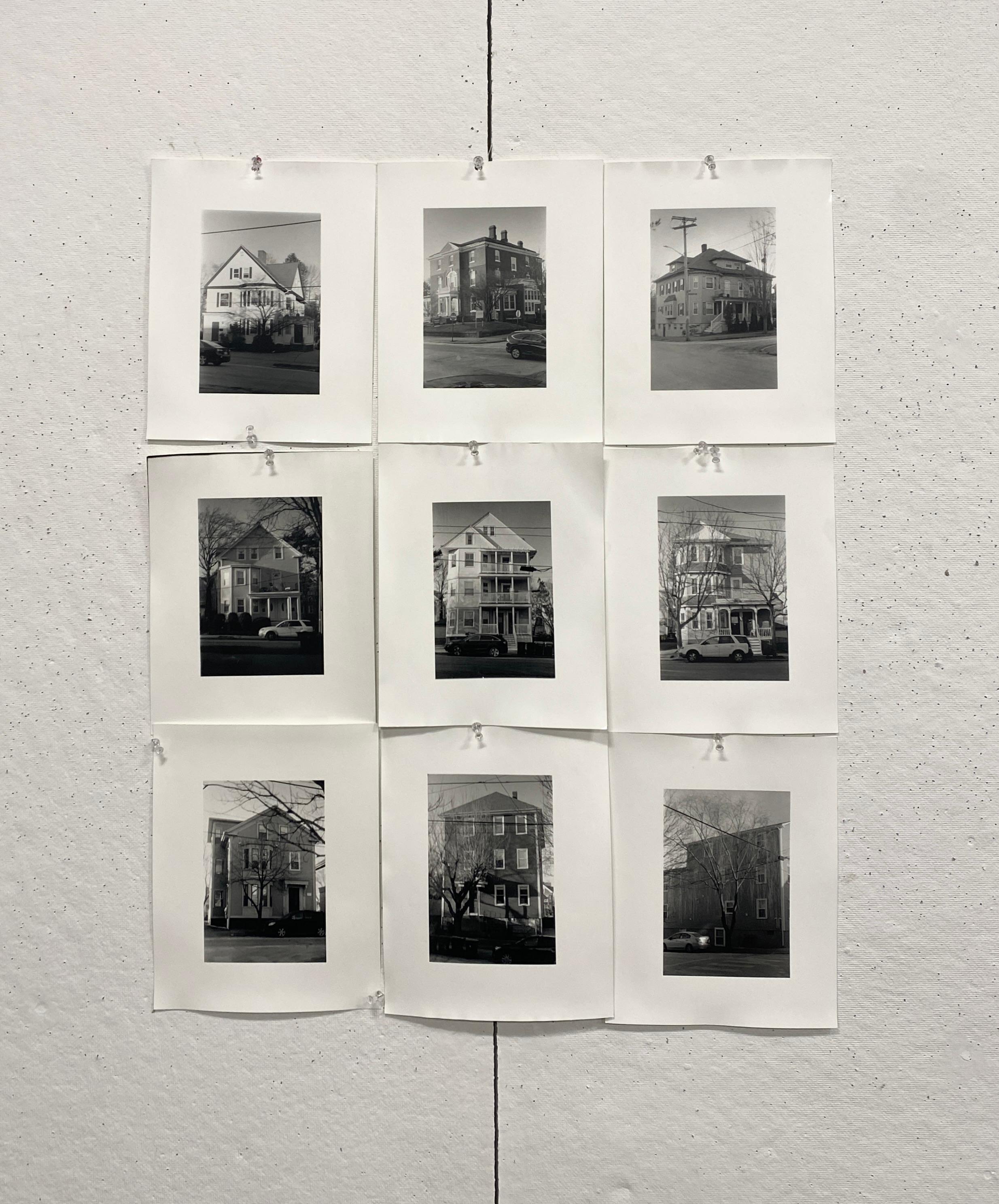
Typology of friends’ houses in Providence2022
Art
35mm, B&W film. Inspired by the Becher’s typology of industrial buildings, I shot a series on Providence houses capturing the classic triple-decker in its multitude of forms.
2022
Typology of friends’ houses in Providence
These houses first sprung up between 1870 and 1910 during the boom of New England mill towns. To the influx of immigrants, these homes offered a path to home ownership and a share of the white picket-fence American dream, as many could live in one unit and rent out the other two.
The triple-decker has risen, fallen and risen again from the ashes — in many cases literally as their wooden frames were often fire traps while in others because they drew the undying spite of housing reformers who found them to be nasty places to live.
More than 100 years since they were first built, we moved in. Instead of an influx of immigrants, it was now a hoard of student — the children of those immigrants — who were inflating the housing market beyond affordability.
With a new set of tenants came new vessels for dreams. For many of us, this was our first signed lease. To have our own house like this! Posters on cinder-block dorm room walls no longer; the sound of our parents’ shouts on our tails us as we romped through the hallways no more!
We worked, slept and played under these roofs. But unlike the true Providence residents before us who had envisioned a life on Power Street or Young Orchard Avenue, we were just passing by: in just a decade, the counters had seen 10 different sets of momentos, the walls infused with aromas of Shakshuka, pasta, Bobotie, Hot Pot, and empanadas from dozens of families’ cookbooks, and the ceilings caved in by hundreds of pairs of feet.
Just as quickly as we moved in, we were gone. Furniture sold to the next bright-eyed tenant. A new series of paintings on the walls and a new set of memories on the fridge door. Do you think the house remembers?
Typologies are documentations. We obsessively document to battle the fragility of “forever.” Maybe if we write enough down and take enough photographs, some images in our mind will always retain their smell and taste.